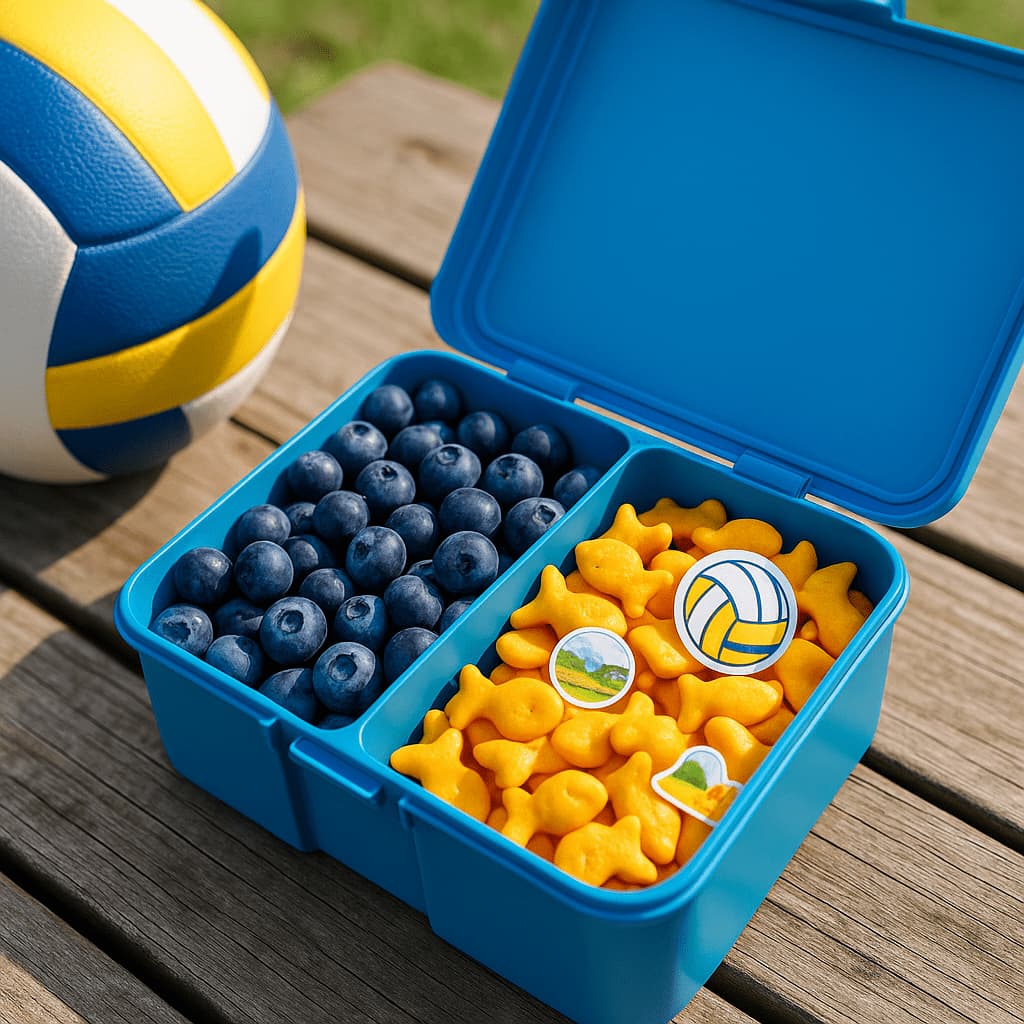
Lunchbox Antioxidants: Blueberries vs. Goldfish (Sorry, Not Sorry)
If you've ever unpacked a lunchbox at 3 p.m. only to find the fruit untouched and the Goldfish bag empty, you know the struggle.
The Great Lunchbox Revelation
The 3 PM Lunchbox Archaeology
Every afternoon, I'd perform the same ritual: opening my daughter's lunchbox like an archaeologist examining ancient artifacts. The apple—brown and sad, clearly untouched. The carefully cut vegetables—still pristine in their little container. But the Goldfish crackers? Gone. The fruit snacks? Vanished. The juice box? Drained.
And every afternoon at pickup, I'd see the same thing: a child who'd consumed roughly 400 calories of processed carbohydrates and artificial colors, now completely melting down in the hallway because her teacher asked her to pack her backpack.
The correlation was undeniable. Processed lunch = afternoon disaster. But getting kids to actually eat the "good stuff"? That was the real challenge.
The Goldfish Epiphany
One particularly rough afternoon, as I watched my daughter have a complete meltdown over misplacing her pencil, I realized something profound: I wasn't just packing a lunch. I was packing her brain fuel for the entire afternoon.
Those Goldfish crackers weren't just a snack—they were setting her up for cognitive failure. The artificial colors, excessive sodium, and refined carbohydrates were creating a perfect storm of blood sugar spikes, crashes, and neurotransmitter chaos.
That's when I decided to go to war against the processed lunchbox culture. Not with lectures or restrictions, but with strategy, creativity, and some seriously good alternatives.
The Science of Lunchbox Success
Understanding the Afternoon Crash Cycle
The Processed Food Pattern:
- 11:30 AM: Child eats processed snacks, refined carbs
- 12:00 PM: Blood sugar spikes rapidly
- 12:30 PM: Brief period of artificial energy
- 1:30 PM: Blood sugar crashes dramatically
- 2:30 PM: Cognitive function plummets
- 3:00 PM: Emotional regulation fails completely
The Antioxidant-Rich Alternative:
- 11:30 AM: Child eats colorful fruits, vegetables, protein
- 12:00 PM: Gradual, sustained energy release
- 12:30 PM: Stable blood sugar, steady focus
- 1:30 PM: Continued cognitive support
- 2:30 PM: Brain function remains optimal
- 3:00 PM: Child has energy reserves for afternoon activities
The Research on Food Additives and Behavior
The landmark Southampton Study, published in The Lancet, followed over 300 children and found significant correlations between artificial food additives and hyperactive behavior.
Specific findings:
- Artificial colors (especially Red 40, Yellow 5, Yellow 6) increased hyperactivity
- Sodium benzoate (common preservative) worsened attention problems
- Combination effects were more severe than individual additives
- Removal of additives led to measurable behavioral improvements
- Effects were dose-dependent—more additives, worse behavior
Follow-up studies confirmed:
- Children with ADHD are more sensitive to food additives
- Natural colorings don't have the same negative effects
- Whole foods provide protective benefits against additive sensitivity
The Antioxidant Advantage
Why Colorful Foods Matter for ADHD Brains
The brain science:
- Neurotransmitter production requires specific nutrients
- Oxidative stress impairs cognitive function
- Antioxidants protect brain cells from damage
- Stable blood sugar supports sustained attention
- Natural compounds enhance neuroplasticity
Top lunchbox antioxidants:
- Blueberries: Anthocyanins improve memory and focus
- Strawberries: Vitamin C supports neurotransmitter production
- Bell peppers: Beta-carotene protects brain cells
- Cherry tomatoes: Lycopene reduces inflammation
- Baby carrots: Fiber slows sugar absorption
Practical Lunchbox Transformation
The Strategic Swap System
Week 1: Foundation Swaps
- Replace Goldfish → Mixed nuts or seeds
- Replace fruit snacks → Fresh berries
- Replace juice box → Water with lemon slices
- Replace white bread → Whole grain options
Week 2: Color Expansion
- Add bell pepper strips with hummus
- Include cherry tomatoes with ranch
- Pack snap peas with yogurt dip
- Try purple grapes with string cheese
Week 3: Protein Power
- Hard-boiled eggs with everything seasoning
- Greek yogurt with berries
- Turkey roll-ups with avocado
- Homemade energy balls with nuts and dates
Week 4: Creative Combinations
- Rainbow veggie cups with multiple dips
- Fruit kabobs with different colors
- Trail mix with dark chocolate chips
- Homemade veggie muffins
The Stealth Strategy Playbook
For the Fruit Resisters:
- Frozen grapes: Taste like popsicles
- Apple slices with cinnamon: Natural sweetness boost
- Berries with vanilla yogurt: Dessert-like appeal
- Mandarin oranges: Easy to peel, naturally sweet
For the Veggie Avoiders:
- Cucumber "coins" with ranch: Crunchy like chips
- Baby carrots with hummus: Dippable and fun
- Sugar snap peas: Sweet and crunchy
- Cherry tomatoes: Bite-sized and mild
For the Protein Skeptics:
- String cheese: Familiar and fun to eat
- Hard-boiled eggs with fun salt: Interactive
- Nut butter on apple slices: Sweet protein combo
- Homemade meatballs: Kid-friendly protein
Advanced Lunchbox Strategies
The Container Psychology
Use the right tools:
- Bento boxes: Make foods look special and separated
- Silicone cups: Keep foods fresh and appealing
- Ice packs: Maintain food safety and freshness
- Fun utensils: Make eating more engaging
Presentation matters:
- Cut foods into fun shapes
- Use colorful containers
- Include positive notes
- Create "theme" lunches
The Prep-Ahead System
Sunday Prep Session:
- Wash and cut all fruits and vegetables
- Portion nuts and seeds into small containers
- Make homemade energy balls or muffins
- Prepare protein options (hard-boil eggs, cook chicken)
Daily Assembly (5 minutes max):
- Choose 1 protein, 2 fruits, 2 vegetables
- Add healthy fat (nuts, avocado, cheese)
- Include water with natural flavor
- Pack reusable utensils and napkins
Frequently Asked Questions
"But healthy foods cost more than processed snacks!"
While the upfront cost may be higher, consider the hidden costs of processed foods: medical bills, behavioral interventions, academic struggles. Plus, buying in season, frozen options, and bulk purchases significantly reduce costs.
"My child refuses to eat anything new!"
Start with tiny exposures—one blueberry next to familiar foods. Don't pressure eating, just exposure. It takes 10-15 exposures before children often try new foods. Patience and persistence are key.
"What about food safety with fresh foods?"
Use proper containers, ice packs, and follow basic food safety guidelines. Most fresh fruits and vegetables are perfectly safe in lunchboxes for 4-6 hours when properly stored.
"How do I handle school policies about nuts?"
Many schools have nut-free policies. Focus on seeds (sunflower, pumpkin), alternative proteins (cheese, hard-boiled eggs), and nut-free energy balls made with seed butters.
"What if other kids tease my child about 'weird' foods?"
Make the foods look as appealing as possible, and consider sending enough to share. Often, other children become curious and interested when foods look fun and delicious.
Your Week 7 Action Plan
Monday: Audit current lunchbox contents and identify one swap Tuesday: Shop for colorful, fresh alternatives Wednesday: Try one new fruit or vegetable preparation Thursday: Experiment with different presentation styles Friday: Assess what worked and plan for next week
Weekend Project: Prep next week's lunchbox components and involve your child in the process
The Real-Life Parent Takeaway
The battle between Goldfish and blueberries isn't really about food—it's about setting your child up for afternoon success. Every lunchbox is an opportunity to provide the nutritional foundation for stable mood, sustained attention, and academic achievement.
The most important insight: You don't need to achieve perfection overnight. Start with one strategic swap, observe the results, and build from there. Small changes in lunchbox composition can create dramatic improvements in afternoon behavior.
The bottom line: While other parents are unknowingly sabotaging their children's afternoons with processed snacks, you can be the parent quietly stacking wins with antioxidant-rich choices. Your child's homework battles and after-school emotional regulation depend on the foundation you pack each morning.
Don't let your child be the only one running on cheese dust when they could be powered by real, brain-supporting nutrition.
Five-Day Antioxidant Lunch Menu (Kid-Tested)
| Day | Main | Color Pop | Protein Boost | Hydration | Treat |
|---|---|---|---|---|---|
| Monday | Turkey + spinach pinwheels | Orange bell pepper strips | Greek yogurt dip | Water + orange slices | Dark chocolate square |
| Tuesday | Garbanzo bean pasta salad | Purple grapes | String cheese | Water + cucumber | Homemade berry oat bar |
| Wednesday | Mini hummus + veggie bento | Rainbow carrots, sugar snap peas | Roasted chickpeas | Water + mint | Freeze-dried apple slices |
| Thursday | Sunflower butter + chia jam sandwich | Kiwi + pineapple skewers | Trail mix (pumpkin/sunflower seeds) | Water + lime | Yogurt-covered raisins |
| Friday | Leftover salmon bites + rice | Cherry tomatoes, edamame | Hard-boiled egg | Sparkling water + splash of 100% juice | Banana “nice cream” frozen bites |
Prep components on Sunday: cook grains, wash produce, portion snacks. Morning assembly becomes a five-minute puzzle.
Grocery List Cheat Sheet
- Produce: Berries, grapes, kiwi, pineapple, apples, oranges, cucumbers, bell peppers, carrots, cherry tomatoes, snap peas, spinach
- Proteins: Turkey slices, hard-boiled eggs, Greek yogurt, roasted chickpeas, string cheese, edamame
- Pantry: Whole-grain wraps, garbanzo pasta, sunflower butter, chia seeds, pumpkin seeds, dark chocolate chips
- Extras: Silicone muffin cups, mini skewers, insulated lunch bag, leakproof dressing containers
Keep this list on your phone for quick restocks. Rotate produce seasonally to cut costs.
Partnering with the School
Open communication makes lunch upgrades stick:
- Email teachers about your nutrition goals: “We’re experimenting with antioxidant-rich lunches to support attention. If you notice changes in afternoon focus, please let me know.”
- Ask about heating options if warm lunches help (some schools allow thermos use).
- Coordinate with cafeteria staff—many will accommodate requests for extra veggies or fruit if you ask kindly.
- Educate your child’s support team about artificial color sensitivities, so they can avoid offering red-dye-heavy classroom treats.
Schools love data. Share improvements you observe; it builds buy-in.
Packing with Your Child: Build Ownership
Kids who help choose are kids who eat. Try this “one from each basket” system:
- Fruits basket: Berries, grapes, clementines, applesauce cups.
- Veggie basket: Pre-cut peppers, carrots, cucumbers, snap peas.
- Protein basket: Cheese sticks, hard-boiled eggs, yogurt pouches, roasted chickpeas.
- Crunch basket: Whole-grain crackers, seed mix, popcorn.
- Hydration station: Stainless water bottle, reusable straw, fruit for infusing.
Let them assemble while you oversee proportions. This builds food literacy and decreases lunchbox battles.
Troubleshooting Guide
| Challenge | Try This | Why it Helps |
|---|---|---|
| Fruit returns untouched | Slice smaller, add squeeze of lemon, pack with fork | Kids prefer bite-sized, low-browning options |
| Veggies come back soggy | Pack with paper towel, use vented containers | Keeps moisture down for crispness |
| Protein ignored | Offer dips (tzatziki, ranch), use fun toothpicks | Interactive foods get eaten |
| Time crunch | Pre-pack containers nightly, keep grab-and-go bins | Removes morning friction |
| Peer pressure | Include one familiar item, coach responses (“I like my energy food!”) | Balances social comfort with nutrition |
Keep It Real
Perfection isn’t required. Some weeks will still feature pizza day and the occasional packaged snack. The goal is progress, not purity. Celebrate the wins you see—fewer afternoon meltdowns, more finished worksheets, better mood in the car ride home. Your intentional lunchbox is part of that success story.
Always consider your child's individual needs, food allergies, and school policies when planning lunchbox contents. Consult with healthcare providers for specific dietary guidance.
Storytime
I used to think crackers + juice were fine. But the post-school meltdown told me otherwise. Once I swapped in blueberries, string cheese, and clementine wedges, my daughter still had fuel left for homework battles.
The Science (in Mom-Speak)
- Brightly colored fruits & veggies = antioxidant powerhouses.
- Protein stabilizes blood sugar, reducing crashes.
- Some artificial additives are linked to hyperactivity in sensitive kids (Meta-analysis, 2014).
- Balanced lunchboxes lead to calmer afternoons.
FAQ
- But fruit is messy! Use silicone cups with lids or pre-frozen options.
- Isn’t fresh too expensive? Frozen works fine and often has more nutrients.
- What if my kid refuses? Pair fruit with dips like yogurt or nut butter.
Real-life mom takeaway: Other parents are quietly packing antioxidant “color cups.” Don’t let your kid be the only one running on cheese dust.
What to try this week: Swap one processed snack for one colorful fruit or veggie daily. Baby steps = calmer homework hours.
Join Our Community 🌟
Get practical methylation & supplement tips, weekly science-backed nutrition insights, and early access to new guides—written for busy parents who want real answers.
No spam. Unsubscribe anytime. 💜
Comments
0 comments
No comments yet. Be the first to share.