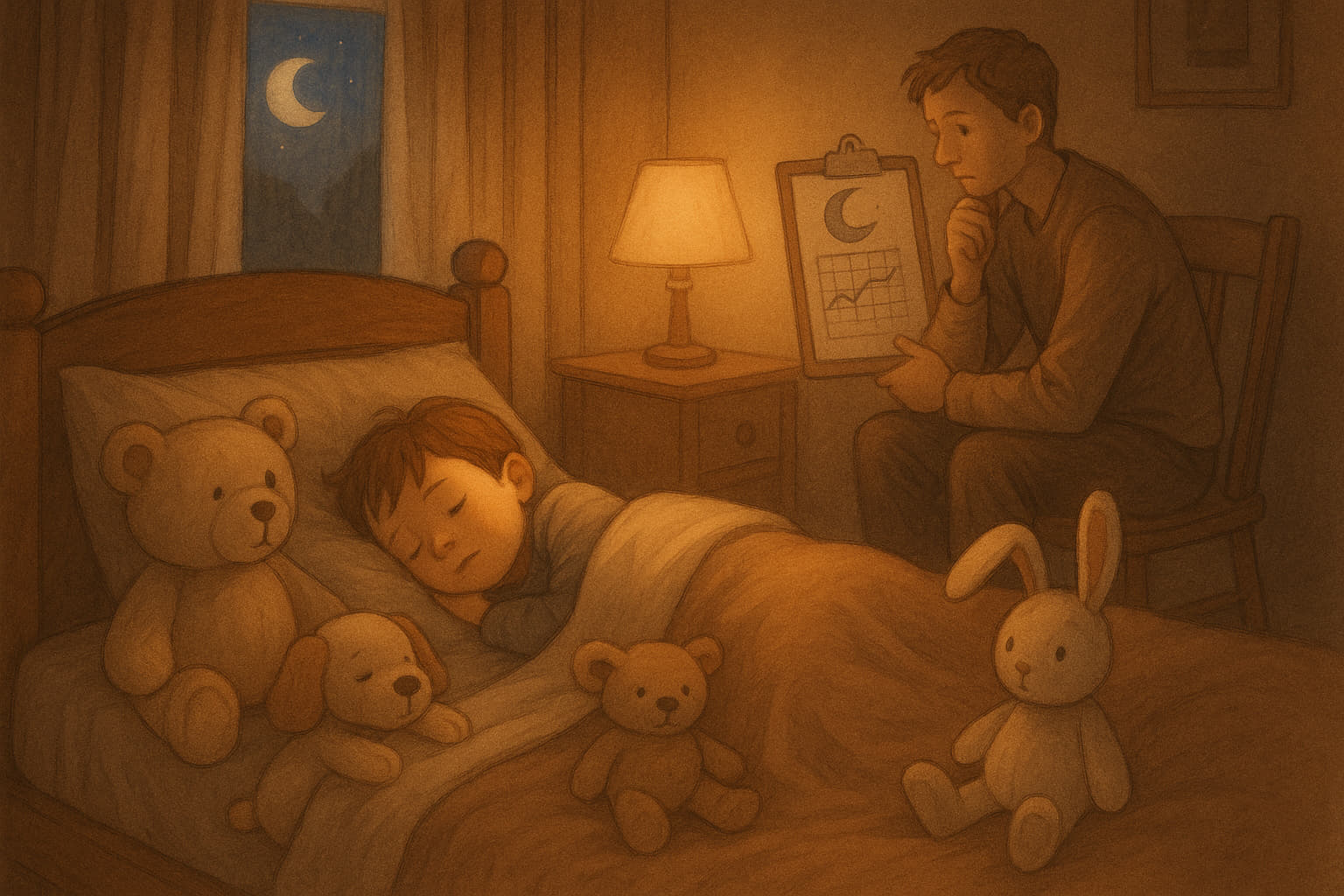
Sleepless Nights and Methylation Problems
Bedtime struggles can exhaust the whole family. But sometimes, sleep issues aren’t just behavioral.
The Science
Methylation directly impacts melatonin production. Without active folate and B-12, serotonin conversion into melatonin slows, leaving children restless.
- A Journal of Clinical Sleep Medicine review notes the role of folate and B-12 in regulating sleep cycles (J Clin Sleep Med, 2018).
- Studies in Nutrients link methylation to circadian rhythm stability (Nutrients, 2019).
The Fix
Methylated B-vitamins and calming evening routines (screen-free time, warm baths, magnesium-rich foods) can improve sleep quality.
Takeaway
If your child can’t fall or stay asleep, it may not be defiance—it could be methylation.
Hero Image Prompt: A child wide awake in bed with moonlight streaming in, worried expression, 16:9.
Sleep Symptoms That Point to Methylation
| Nighttime Behavior | Potential Biochemical Root |
|---|---|
| Takes 60+ minutes to fall asleep | Low serotonin → low melatonin conversion |
| Wakes at 2–3 a.m. “wired and chatty” | Cortisol surge from neurotransmitter imbalance |
| Night terrors / sleepwalking | Glutamate/GABA imbalance tied to B6 deficiency |
| Restless legs, kicks covers off | Low ferritin or magnesium depletion |
| Snoring / mouth breathing | Structural issues + folate deficiency affecting muscle tone |
| Morning “monster mode” despite enough hours | Poor sleep quality + sluggish methylation |
Sleep is chemistry. Dial in methylation, and bedtime drama calms down.
How Methylation Makes Melatonin
- Tryptophan from proteins converts to 5-HTP.
- 5-HTP converts to serotonin (needs vitamin B6).
- Serotonin converts to N-acetylserotonin (requires acetyl groups + magnesium).
- N-acetylserotonin converts to melatonin (needs SAMe, your primary methyl donor).
- Every step depends on folate, B12, B6, magnesium, and iron.
If any co-factor is missing, the chain breaks—and bedtime stretches on forever.
Daytime Steps for Better Nights
- Morning sunlight (within 30 minutes of waking): Anchors circadian rhythm.
- Protein-rich breakfast: Stabilizes serotonin production (eggs, Greek yogurt, turkey).
- Movement every 2–3 hours: Kids who move sleep better. Walking meetings? Absolutely.
- Hydration: Dehydration triggers cortisol surges in the evening. Aim for 6–8 cups daily.
- Limit artificial dyes and high-sugar snacks: They ramp up hyperarousal and delay sleep onset.
Evening Wind-Down Blueprint
| Time | Action | Why It Works |
|---|---|---|
| 6:00 p.m. | Balanced dinner (protein + veggies + slow carbs) | Prevents 2 a.m. blood sugar crash |
| 6:45 p.m. | Dim lights, switch to warm lamps | Signals brain to produce melatonin |
| 7:00 p.m. | Magnesium-rich snack (banana + almond butter) | Supports muscle relaxation |
| 7:15 p.m. | Warm bath with Epsom salts (2 cups) | Provides magnesium sulfate through skin |
| 7:45 p.m. | Screen-free quiet play: puzzles, LEGO, coloring | Keeps nervous system in chill mode |
| 8:00 p.m. | Supplements (if part of plan) + bedtime stories | Binds routine to positive feelings |
| 8:30 p.m. | Lights out, white noise or calm music | Reinforces sleep associations |
Repeat nightly. Routine cues biology faster than negotiation.
Supplements to Discuss with Your Provider
- Methylfolate + Methylcobalamin – Supports serotonin-to-melatonin conversion.
- Vitamin B6 (P-5-P) – Co-factor for neurotransmitter production.
- Magnesium Glycinate or Oxide – Calms muscles, regulates GABA.
- Low-dose melatonin (0.5–1 mg) – Short-term bridge while methylation support kicks in.
- Iron – If ferritin < 50 ng/mL and restless legs persist.
- Glycine or L-theanine – Promotes relaxation without grogginess.
Always start low and snag professional guidance—especially with melatonin and iron.
Screen Hygiene Tips
- Use blue-light filters on devices after sunset (Night Shift mode).
- Transition to audiobooks or podcasts if your kid loves stories but can’t ditch screens yet.
- Create a charging station outside bedrooms—out of sight, out of mind.
- Replace bedtime scrolling with family gratitude journaling or guided meditations.
Sleep-Friendly Bedroom Audit
- Temperature: 65–68°F. Cooler rooms support melatonin release.
- Lighting: Blackout curtains + nightlight with red/orange hue if needed.
- Sound: White noise machine or gentle fan masks sudden noises.
- Smell: Diffuse lavender or cedarwood essential oil 30 minutes before bed.
- Clutter: Tidy spaces calm the nervous system. Create a bedtime basket with essentials (books, fidgets, journal).
Partner with the Right Professionals
- Integrative pediatrician: Orders labs (ferritin, vitamin D, methylation markers).
- Sleep specialist: Rules out apnea or restless leg syndrome.
- ENT/dentist: Evaluates mouth breathing, tongue tie, structural issues.
- Occupational therapist: Provides sensory strategies to calm a hyper-alert nervous system.
FAQ
- “My child can’t fall asleep even with melatonin.” Check methylation co-factors, iron levels, and nighttime screen use. Melatonin without cofactors is like turning the key in an empty car.
- “Night waking is the issue.” Focus on blood sugar stability (protein at dinner), consistent bedtime, and adrenal rhythms.
- “We have an inconsistent schedule.” Consistency anchors the circadian rhythm; even weekends benefit from predictable wake/sleep windows.
- “Supplements make me nervous.” Start with food, light, movement, and environment. Supplements are stage-two, not step-one.
Week 15 Action Plan
Monday: Track bedtime, wake-up time, and nighttime wakings.
Tuesday: Add morning sunlight exposure within 30 minutes of waking.
Wednesday: Serve magnesium-rich dinner (salmon, spinach, pumpkin seeds).
Thursday: Dim household lights 90 minutes before bed.
Friday: Trial a screen-free bedtime routine with a warm bath + story.
Weekend Project: Create a bedtime basket (favorite books, essential oils, sleep mask, fidget toy) and involve your child in setting up their “calm cave.”
Final Encouragement
Sleep is the brain’s restoration window. When methylation runs smoothly, bedtime becomes a peaceful handoff instead of a nightly negotiation. Keep tweaking the routine, fueling with the right nutrients, and listening to your child’s cues. Restored sleep restores the entire family. You’ve got this.
Join Our Community 🌟
Get practical methylation & supplement tips, weekly science-backed nutrition insights, and early access to new guides—written for busy parents who want real answers.
No spam. Unsubscribe anytime. 💜
Comments
0 comments
No comments yet. Be the first to share.